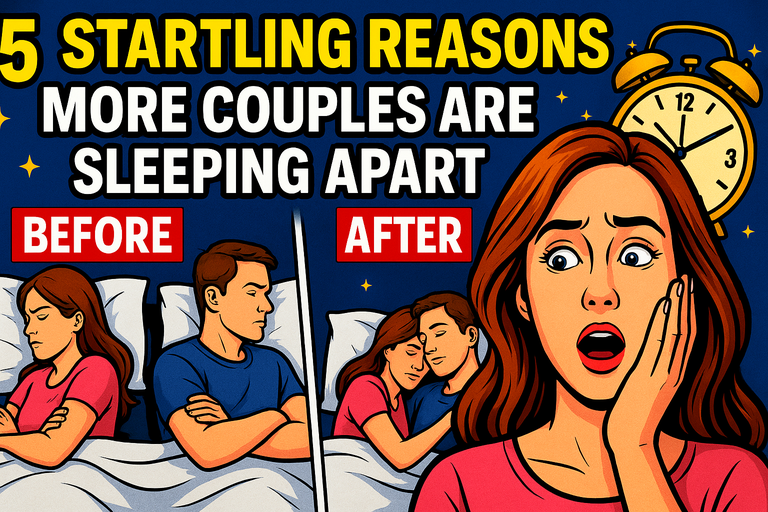
5 Startling Reasons More Couples Are Sleeping Apart—And What You Can Do to Save Your Sleep (and Your Relationship!)

- Posted in Sleep Science by

5 Startling Reasons More Couples Are Sleeping Apart—And What You Can Do to Save Your Sleep (and Your Relationship!)

Picture this: You and your partner, once happy bedfellows, are now spending nights in separate rooms—and it’s not because anyone’s in the doghouse. Sound familiar? If it does, you’re not alone. A 2025 feature by the New York Post reveals a dramatic spike in couples agreeing to a 'sleep divorce.' But what’s really driving this huge social shift—and is your relationship at risk?

Let’s pull back the covers on why sleep divorce is suddenly everywhere, what the real dangers are, and how you can reclaim both your sleep and your connection, starting tonight.


1. Snoring: The Silent Relationship Wrecker

You’re drifting off after a long day, ready for dreamland... until the symphony of snores begins. If this scenario makes you cringe, you’re in good (if tired) company: snoring remains the #1 reason couples split up at bedtime. According to the recent NY Post article, restless nights caused by a partner’s snoring are sparking a new wave of 'sleep divorce' discussions in bedrooms everywhere.

But why does snoring strike such a nerve? Beyond the noise, chronic sleep loss leads to irritability, resentment, and even long-term relationship strain. It’s not just about comfort—it’s about connection. Are we destined to sleep alone, or is there another way?

2. Different Sleep Schedules—And the 24/7 World

We live in an always-on society. One partner may need to rise at dawn for a fitness routine, while the other is still deep into a late-night Netflix binge. These clashing natural rhythms—known as 'chronotypes'—are more pronounced than ever, especially with remote work and flexible jobs blurring the boundaries between day and night.

When compromise feels impossible, many couples opt for separate beds or even rooms. But is this just a band-aid fix, or does it create more distance in the long run?

3. The Tech Trap: Blue Light, Late-Night Scrolling, and Sleep Sabotage

Let’s be honest—those blue-lit screens are keeping a lot of us awake. If one partner snoozes while the other doomscrolls, nobody wins. The rise of personal devices means more couples are physically in bed but mentally miles apart, leading to disrupted sleep and, eventually, separate bedrooms.

The real kicker? Poor sleep isn’t just making us grumpy—it’s triggering a cascade of health risks from weakened immunity to emotional burnout.

4. Sleep Disorders Beyond Snoring—The Hidden Culprits

Sleep apnea, restless legs syndrome, and insomnia are on the rise, partly fueled by modern stress and lifestyle shifts. According to sleep experts, untreated sleep disorders in one partner can lead to chronic sleep deprivation for both, making the allure of solo slumber even stronger.

This begs the question: Are we giving up too soon, or are there innovative solutions that could help couples stay together—at least at night?

5. The Social Stigma Is Fading—But Is It Helping?

Ten years ago, separate beds might have raised eyebrows. Today, nearly 1 in 4 couples admit to sleeping apart sometimes, and social media communities are buzzing with tips for making it work. But is normalizing sleep divorce solving the root problem—or just masking it?

Experts warn that while solo sleep might offer short-term relief, it can undermine intimacy, communication, and even long-term relationship health. The question isn’t whether sleep divorce is justified—it’s whether you’re willing to fight for a solution that works for both of you.


So… What Can You Actually Do About It?

Ready for the plot twist? You don’t have to pick between restful sleep and relationship bliss. Here’s how to fight back against the sleep divorce epidemic:

  • Talk it out: Open, honest conversations about sleep habits and struggles can transform frustration into teamwork.
  • Set boundaries for tech: Try a 'no screens in bed' rule for a week. You might be shocked at how quickly sleep—and connection—improves.
  • Invest in smart solutions: Modern anti-snoring devices, high-quality mattresses, and blackout curtains can make a huge difference.
  • Get professional help: If snoring or other issues persist, see a sleep specialist. Don’t suffer in silence—help is available.

One innovative approach is using a customizable anti-snoring device. Devices that combine mandibular advancement with tongue stabilization have shown promising results in independent reviews. If you’re curious about a science-backed, comfortable solution you can personalize at home (even in your microwave!), check out these advanced anti-snoring mouthpiece options that thousands of couples are already using to sleep together again—peacefully.


The Takeaway: You Can Have Restful Sleep and a Healthy Relationship

Sleep divorce might be trending, but it’s not inevitable. Today, with smart solutions and honest conversations, you can get your relationship—and your mornings—back on track. Imagine waking up refreshed and connected. Isn’t that worth fighting for?

Have you or someone you know tried a sleep divorce? What’s worked for you, and what would you try next? Let us know in the comments—let’s help each other wake up to better mornings, together!

5 Powerful Lessons About Rest We Can Learn From a Viral Court Case

- Posted in Sleep Optimization by

5 Powerful Lessons About Rest We Can Learn From a Viral Court Case

Could a news headline actually teach you something about sleep and resilience?

This week, as I scrolled through the latest headlines with my usual morning coffee, one story stopped me in my tracks: The full story of Dublin firefighter Terence Crosbie’s Boston trial. If you haven’t seen it yet, Crosbie—a firefighter from Dublin—was arrested while in Boston for the St Patrick’s Day parade…and has now spent 15 months in jail awaiting trial.

No matter where you stand on the details, one thing is clear: the toll that such a prolonged, stressful ordeal must take on someone’s body and mind. It got me thinking—when life throws the unthinkable at us, what can we do to hold onto our health, sanity, and the energy we need to show up for life?

Lesson 1: Chronic Stress Wrecks Your Sleep (and Everything Else)

Stuck in a cell, uncertain about the future, nobody sleeps well. That’s a fact. High-profile court cases like this one are a harsh reminder: stress and poor sleep feed each other in a vicious cycle. Even outside the courtroom, life’s everyday anxieties are enough to keep us tossing and turning.

Here’s the kicker—chronic stress doesn’t just mean a bad night of sleep. It can: - Lower your immune system - Make you moody and unfocused - Even make you more vulnerable to illness

So what can we ordinary mortals do when the world spins out of control?

Lesson 2: Small Routines Are a Lifeline in Chaos

Reading about Mr. Crosbie, I wondered: did he have any bedtime ritual in jail? Did he read? Meditate? Anything to signal to his mind and body that it’s time to rest?

Research shows that when you’re facing uncertainty, the little routines are what save you. That’s true whether you’re awaiting a verdict or just struggling with work burnout. Try:

  • Going to bed at the same time each night (yes, even weekends)
  • A short journal session
  • Sipping a calming herbal tea
  • Keeping your pre-bed phone use to a minimum (tough, I know!)

These micro-habits don’t fix everything, but they’re anchors when life gets wavy.

Lesson 3: Sleep Is When Our Resilience Rebuilds

Imagine facing day after day in limbo—like our firefighter in Boston. Your resilience is tested every single morning. Did you know most of your emotional processing, memory consolidation, and physical recovery happen at night?

If you’re not getting deep, restorative sleep, it’s like going into battle in flip-flops. Your brain and body need quality rest to make wise decisions—especially during stressful times.

Lesson 4: Better Sleep Means Better Judgment

One overlooked twist in the story: how many tragic, life-altering mistakes happen when people are sleep deprived—whether in a courtroom, at work, or in relationships? It’s easy to judge from afar, but any one of us can make bad calls when we’re running on fumes.

Want to improve your own judgment (and your mornings)? Start with your sleep. Leading-edge science is now showing that improving your sleep isn’t just for your mood—it actually boosts your trust in your own gut instincts.

Lesson 5: Modern Solutions for Modern Stresses

If you’re like me, you know that snoring—the kind that shakes the walls and wakes up your partner—can absolutely sabotage your rest. Modern times call for smarter solutions.

That’s where I stumbled onto customizable anti-snoring mouthpieces like the ones at Snorple. Don’t worry, this isn’t a hard sell. But I was fascinated by how much sleep science has evolved. Hypoallergenic materials, adjustable settings, even microwave prep (no more boiling water!)—all designed so you and your partner can both wake up ready to face your own trials, big or small.

If a firefighter facing the ultimate test can remind us of the value of rest, maybe we can respond by actually investing in the tools that help us sleep better—whether it’s new tech, a fresh pillow, or just a better wind-down routine.


Bottom line?

It doesn’t take a court case to realize: when life gets hard, rest is resistance. Take your sleep as seriously as you take your to-do list. And if you’re struggling, remember, there are modern, science-backed tools and small rituals that can help you reclaim your nights—and your resilience.

So—what’s your sleep struggle right now? Drop a comment, DM, or share your favorite hack for winding down after a tough day. We’re all fighting something. Let’s help each other wake up ready for what comes next.

5 Sneaky Sleep Scams That Are Sabotaging Your Mornings (and What To Do Instead!)

- Posted in Sleep Optimization by

5 Sneaky Sleep Scams That Are Sabotaging Your Mornings (and What To Do Instead!)

Ever woken up groggy and wondered if there’s more to your lousy sleep than just too much late-night scrolling?

Same here. The other morning, after tossing and turning all night, I poured my last drop of oat milk into my coffee and opened my phone—only to see a warning about the latest wave of scams making the rounds. Turns out, sleep scams are a very real (and really sneaky) part of this new wave. If you haven’t read the recent Fox News piece on the Top 5 scams spreading right now, grab your coffee—because you might be one “miracle gadget” away from being duped (and missing out on better mornings).

So, what’s keeping us from our glowiest mornings? Sometimes, it’s not just the pillow or the playlist—it’s those deceptive products and promises lurking on your screen at 2am. Let’s break down the biggest scams out there, how to spot them, and what actually works when you want to wake up rested and ready to shine.


1. The “Miracle” Sleep Gadget That Never Arrives (or Does NOTHING)

You’ve seen the ads. A device “guaranteed” to stop snoring, track sleep, AND brew your morning coffee, all for the price of a pizza. But here’s the deal: a shocking number of these miracle gadgets either never ship, or arrive looking nothing like the glossy ad.

Red flag: If the website is missing real customer reviews, has only stock photos, or demands wire transfers—run!

Instead, stick with companies who are transparent about their process and offer real guarantees. (PS: Some, like Snorple’s official site, openly provide a 30-day money-back guarantee and actual testimonials. Imagine that—peace of mind AND a solid night’s sleep.)


2. The Suspicious Sleep Supplement Scams

“Lose weight, sleep like a baby, boost immunity”—all in one “secret” powder. Sound familiar? As Fox News pointed out, scammers have upped the ante with glossy “doctor-approved” sleep supplements that, at best, drain your wallet—and at worst, can be dangerous.

How to spot the scam: - No ingredient transparency - “Proprietary blend” with no details - Over-the-top claims (“Works in HOURS!”)

What to do instead: - Check for third-party testing - Talk to your doctor before trying new products


3. Fake Reviews & Phony Endorsements

Ever notice how some products have hundreds of five-star reviews—all posted on the same day? Yeah, that’s not a good sign. Faked testimonials from “doctors” or “sleep experts” are a massive problem.

Why does this matter? Because making the wrong choice for your sleep health can lead to even worse mornings. Real solutions—like customizable anti-snoring mouthpieces made with hypoallergenic materials (think Snorple’s unique mouthpiece)—are backed by real users and independent reviews, not just glitzy paid actors.


4. Phishing For Your Personal Info (While You Sleep)

Here’s a creepy one: Some scam “sleep tech” sites aren’t even interested in selling you a product—they want your credit card number, email, and more. You think you’re buying a gadget, but you’re actually handing over your digital life.

Protect yourself: - Only buy from websites with proper security (look for HTTPS, not just HTTP!) - Google the company before you purchase - If a deal looks too good to be true, it probably is


5. Subscription Traps That Never Let You Go

You order a “free” sleep sample and suddenly, you’re billed every month for eternity. These hidden subscription scams prey on tired, desperate night owls.

What’s the fix? Only trust companies that are upfront about their billing policies and let you cancel easily. (Again, legit brands like Snorple show all details and give you plenty of time to try risk-free. Transparency, people!)


So, What Actually Helps You Sleep (and Wake Up Energized)?

Here’s the truth: There’s no magic bullet, but there are science-backed products and habits that can transform your sleep and mornings: - Use customizable solutions that address your unique needs (e.g., adjustable mouthpieces for snoring) - Prioritize consistent bedtimes and screen-free wind-down routines - Be wary of bold claims—read independent reviews before you buy

When I started focusing on proven, well-reviewed sleep products and stopped chasing every new “hack,” my mornings started glowing up for real. It’s not always easy—especially when life feels like one giant group chat of scammy ads and broken promises—but it’s worth it.


The Bottom Line: Protect Your Sleep (and Your Wallet)

It’s 2025, and scammers are getting better at blending in. But you’re smarter than any pop-up ad or late-night infomercial. If you want real rest and those glowing, energized mornings (without the “did I just get scammed?” dread), double-check anything before you click “buy,” and lean toward brands with transparency, solid guarantees, and rave reviews from real people like you.

Ready to take charge of your sleep and wake up with energy that lasts? Start by ditching the scams and giving your mornings the honest, science-backed support they deserve. Want to see what that looks like? Check out the innovative features of a customizable, proven anti-snoring mouthpiece to support deeper sleep and better mornings.

What sleep scam did you almost fall for (or actually fall for!)? Share your story below—let’s outsmart the scammers together, one glowing morning at a time.
7 Surprising Sleep Tech Innovations You Didn’t Know Could Transform Your Nights (and Mornings!)

- Posted in Sleep Optimization by

7 Surprising Sleep Tech Innovations You Didn’t Know Could Transform Your Nights (and Mornings!)

Did you ever imagine your gadgets could give you the best sleep of your life? Picture this: It's 2 a.m., city sirens wail, your partner snores like a freight train, and every little sound keeps you from that glorious, restorative slumber. But what if a few clever innovations could change all that—forever?

Welcome to the high-tech era of sleep optimization! This year, breakthrough devices are quietly revolutionizing our nights—and our mornings. In fact, just this month, Anker’s new Soundcore Sleep A30 wireless earbuds made headlines by introducing active noise canceling specifically for sleep. So, which game-changers should be on your radar—and which ones could help you wake up energized, not exhausted?

Let’s dive into seven sleep tech surprises that could turn your restless nights into dreamy mornings.


1. Active Noise-Canceling Sleep Buds: Sound Asleep, Literally

Tired of earplugs that barely dull the din? Anker’s latest Soundcore Sleep A30 earbuds are generating serious buzz, and for good reason. Unlike previous models, these buds harness active noise canceling (ANC), not just passive muffling. They’re designed to block everything—from your neighbor's late-night TV to the unpredictable chaos of city life—without the discomfort of big, bulky headphones.

What’s even cooler? They pair gentle ambient sounds with ANC, crafting a tranquil cocoon for your brain. It’s like having a personal white-noise machine and noise-canceling headphones in one tiny package—and yes, you can even sleep on your side.

But here’s the million-dollar question: Can blocking noise really make a difference in your sleep quality?

Short answer: Absolutely. Studies show that minimizing nighttime disruptions can dramatically improve deep sleep cycles, leading to sharper focus and better moods each morning.


2. Customizable Anti-Snoring Devices: The Silent Revolution

Now, let’s talk about the real elephant (or should we say, freight train) in the bedroom: snoring. You know the drill—one person’s thunderous snores, another’s sleepless night. What if you could both wake up refreshed?

Here’s where companies like Snorple’s anti-snoring mouthpiece are changing the game. Unlike generic gadgets, Snorple merges two science-backed approaches with its hybrid device: mandibular advancement (moving your jaw forward) and tongue stabilization. What’s wild is how you can fine-tune the fit at home using simple boil-and-bite (or even microwave!) customization. Made from hypoallergenic, latex-free materials, it’s comfortable enough for nightly use—and has earned high praise from over 100,000 users.

The biggest win? Many report deeper, unbroken sleep for snorers and their partners, with results often noticeable in just a few nights. And let’s be honest—if you (or your partner) struggles with snoring, a silent night is a priceless luxury.


3. Smart Sleep Trackers: The Nighttime Detective on Your Wrist

Ever wondered why you wake up groggy even after “enough” sleep? Enter the new generation of wearable sleep trackers. Devices like the Oura Ring, Fitbit Sense, and Apple Watch Series 9 now decode your sleep cycles—tracking everything from heart rate variability to micro-movements and even blood oxygen levels.

But these aren’t just passive observers. Many trackers provide actionable feedback: Are you tossing and turning at 3 a.m.? Are your deep sleep cycles interrupted? The latest models even suggest tweaks to your evening routine based on your unique patterns.


4. App-Connected Smart Alarms: Wake Up at Your Sweet Spot

If your alarm always pulls you out of a dream, you’re not alone. Smart alarms analyze your sleep in real time, waking you at the lightest phase—within a custom window—so you feel naturally refreshed instead of jarred awake. Apps like Sleep Cycle and smart clocks like Hatch Restore are leading this wave, and once you try it, you may never go back.


5. Personalized Bedding Technology: The Comfort Revolution

Last but not least, let’s talk about the feel of sleep. Today’s smart mattresses and bedding feature everything from climate control and mattress firmness adjustments to motion separation that keeps you blissfully unaware of your partner's midnight sheet-tugging.

Some brands even allow you to control each side of the bed independently—no more midnight thermostat wars!


So…Will Sleep Tech Really Change Your Mornings?

Here’s what’s exciting: By attacking sleep disruptors at their source—whether it’s noise, snoring, poor timing, or uncomfortable bedding—these innovative tools are restoring energy, mood, and wellness. And best of all, they’re increasingly accessible. No prescription, no awkward doctor’s visits—just a smarter approach to slumber.

Want to wake up energized and ready to own your day? Start small: Tackle one source of disruption. If snoring’s your nemesis, explore the science-backed solutions from companies like Snorple’s anti-snoring mouthpiece. If outside noise is your kryptonite, consider the cutting-edge ANC sleep buds making headlines this year.

Bottom line: Sleep tech isn’t just about cool gadgets; it’s about giving you the restorative power of truly great sleep—so you can bring that GlowMorning energy to everything you do.

What’s the first sleep upgrade you’ll try? Share your experiences and favorite gadgets in the comments below—and let’s help each other rise (and shine) to our full potential!

7 Hidden Sleep Saboteurs Lurking in Your Relationships (and How to Outsmart Them!)

- Posted in Sleep Optimization by

7 Hidden Sleep Saboteurs Lurking in Your Relationships (and How to Outsmart Them!)

Ever caught yourself wide awake at 2 a.m., replaying that totally random comment your partner made at dinner? Or maybe you’ve sensed the tension in the air—all while desperately wishing for the kind of deep, restorative sleep that could turn your mornings from groggy to glowing.

This isn’t just your overactive imagination. Our connections, conversations, and yes—those unspoken thoughts—can quietly disrupt our sleep cycles in ways most of us never realize. Inspired by a hilarious (and more-than-a-little relatable) story from The Daily Mash, where a woman “hears” her boyfriend’s silent dissent, we’re diving deep into the invisible link between your relationships and the quality of your shut-eye.

But what exactly are these hidden saboteurs—and how do you outsmart them to reclaim glorious, energized mornings? Let’s break it down.


1. The Not-So-Silent Partner: Nighttime Noises and Snoring

We laugh about partners who snore, but let’s be real—nightly snoring is a major sleep-wrecker, and one of the stealthiest ways relationships sabotage rest. According to the Sleep Foundation, almost half of adults snore at some point, but when it’s happening next to you every night, your deep sleep is in serious jeopardy.

What can you do? - Talk openly (and kindly!) about snoring—it’s more common than you think. - Explore anti-snoring solutions together. Some innovations, like the customizable Snorple mouthpiece, combine comfort and effectiveness, making it easier to address the issue as a team rather than a “me vs. you” battle. - Prioritize a supportive, judgment-free vibe. It’s about better sleep for both of you.


2. Emotional Echoes: When Arguments Follow You to Bed

Ever notice you sleep horribly after an unresolved disagreement? Or you’re restless thanks to “non-verbal” tensions, just like the girlfriend in The Daily Mash article who could practically hear her boyfriend’s silent objections?

Science says emotional stress—especially conflict—spikes cortisol levels, making it hard to fall and stay asleep.

Pro tip: - Try “no-argument zones” at least an hour before bedtime. - Practice a calm-down routine: deep breaths, quiet reading, or even a silent walk together can reset your mood and set the stage for better rest.


3. The Sleep Style Clash: When Routines Collide

One night owl, one early riser? That mismatch can lead to a nightly game of “Who Gets to Control the Lights/Wind Down Time/Thermostat.” Over time, these micro-frictions add up, leaving you both sleep-deprived.

Here’s how to bridge the gap: - Find overlapping “wind down” windows, even if brief. - Invest in sleep essentials—eye masks, white noise machines, blackout curtains—so your partner’s habits don’t ruin your rest. - Sync up on weekends for bonus bonding (and to reset your routines).


4. Tech Between the Sheets: Too Many Screens, Too Little Sleep

Scroll wars are real—one partner’s endless doom-scrolling can keep the other up, even if they’re not sharing a screen. Blue light, mental stimulation, and constant notifications can both “hear” and feel like a third presence in bed.

Set up tech boundaries together: - Commit (together!) to a screen-free bedroom policy. - Try trading your phones for a shared playlist or story before sleep.


5. The Unspoken Truth: Health Issues That Don’t Get Addressed

Sometimes, poor sleep is rooted in health realities neither partner wants to talk about: sleep apnea, stress, or anxiety. Ignoring these issues means everyone loses.

Here’s what smart couples do: - Normalize conversations about sleep quality—ask each other how you really slept. - Encourage each other to seek real solutions. Customizable devices like Snorple’s anti-snoring mouthpiece (which uses both jaw and tongue positioning—seriously clever engineering!) are a non-intimidating starting point. - Explore telehealth or sleep clinics as a team; there’s power (and accountability) in partnership.


Outsmarting Relationship Sleep Saboteurs: Your Next Moves

The truth? Our relationships—romantic or otherwise—shape our sleep more than we ever realized. From the obvious (snoring) to the subtle (emotional tension), every dynamic plays a part. But you’re not powerless.

Remember: - Approach sleep struggles as a united front. - Address issues with humor and honesty—sometimes a little laughter, like the comic scenario from The Daily Mash, is the fastest route to resolution. - Leverage proven tools and routines that support both your needs.

If you’re ready to end the battle against midnight disruptions (and finally wake up with real energy), consider exploring customizable solutions like the Snorple mouthpiece for shared sleep harmony. Because the best mornings start with both partners—and all your unspoken thoughts—well-rested.

What sleep saboteur has surprised you the most? Got a story to share or a trick that changed your mornings? Sound off in the comments below!

How Climate Change Is Secretly Stealing Your Sleep—And 5 Powerful Ways to Fight Back Tonight

- Posted in Sleep Optimization by

How Climate Change Is Secretly Stealing Your Sleep—And 5 Powerful Ways to Fight Back Tonight

Imagine waking up groggy, your heart racing, your mind foggy—and it’s not just because you stayed up late scrolling on your phone. Something invisible, powerful, and global is lurking in your bedroom, sabotaging your sleep. Spoiler alert: it’s not your partner’s snoring. It’s climate change.

Sound dramatic? It’s not. According to a recent Fortune article, warmer temperatures are making obstructive sleep apnea (OSA) more common—and more severe. With over 25 million Americans already affected, this is a wake-up call none of us can afford to hit snooze on.

But here’s the GOOD NEWS: you’re not powerless. There’s a small army of simple, science-backed strategies you can use tonight to reclaim deep sleep and wake up with that vibrant, “I-can-take-on-anything” morning energy. Ready to fight back? Let’s unlock the secrets.


Why Is Climate Change Messing With Our Sleep?

Let’s break it down: hotter nights mean restless tossing and turning. Our bodies are wired to cool down as we snooze. When temperatures climb—even just a few degrees—it disrupts this essential process. Add in air pollution and allergies stirred up by weather extremes, and it’s no wonder millions more are struggling to breathe easy at night.

But the surprising culprit? Sleep apnea—the sleep thief you might not even know you have.

Sleep apnea doesn’t just make you snore. It literally stops your breathing, jolting you awake dozens (sometimes hundreds) of times a night. And studies show climate change is making this condition worse, fast. So what can you do, starting tonight?


5 Proven Tricks to Outwit the “New Normal” for Better Sleep

  1. Keep It Cool, Consistently

    • Invest in blackout curtains, fans, or a smart thermostat. Research shows the ideal bedroom temp is 60-67°F (15-19°C). Pro tip: Try a chilled water bottle at your feet to fake the coolness your body craves.
  2. Prioritize Your Air Quality

    • Use an air purifier or keep windows closed during heavy pollen days. This reduces allergy triggers that can worsen snoring and apnea.
  3. Upgrade Your Evening Routine

    • Ditch screens 30 minutes before bed—blue light messes with your natural cooling process. Opt for relaxing rituals: a warm shower, gentle stretching, or journaling.
  4. Elevate Your Sleep Position

    • Sleeping on your back can make sleep apnea worse. Prop yourself up on your side with a body pillow, or elevate your head to open up airways naturally.
  5. Embrace Modern Solutions

    • Cutting-edge anti-snoring devices are changing the game. For example, the Snorple customizable mouthpiece uses a blend of jaw advancement and tongue stabilization to help you—and your partner—enjoy silent, deep sleep. Over 100,000 people swear by their boil-and-bite fit, which you can even prep in the microwave. It’s a subtle, affordable way to fight sleep apnea’s nightly grip.

The Hidden Costs of Lost Sleep

Dragging yourself out of bed, clutching your coffee, wondering why you’re still exhausted? Chronic sleep loss doesn’t just steal your mornings—it chips away at your health, mood, and productivity.

OSA, when untreated, can increase your risk of heart disease, weight gain, and even memory problems. As the world heats up, these risks are only getting more real—and more urgent.


Real People, Real Results

Here’s the inspiring part: with the right tools and tweaks, you can reclaim your deep sleep, even in a warming world. Customers who’ve tried mouthpieces like Snorple rave about their first snore-free nights in years, and waking up feeling truly refreshed. Imagine what you could achieve with that kind of energy—starting tomorrow.


The Future of Sleep in a Warming World

We can’t change the climate overnight. But we can take control of our microclimates—our bedrooms, our habits, our health. By staying informed and proactive, you’re not just surviving the new normal. You’re thriving, one empowered, energized morning at a time.

What’s your biggest sleep struggle as summer heats up? Which of these strategies will you try tonight? Drop a comment below—let’s create a community of unstoppable, well-rested GlowMornings!